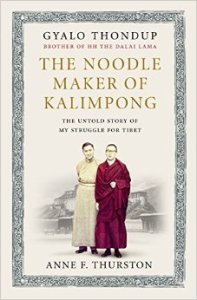
Thondup, Gyalo. 2015. , The: The Untold Story of the Dalai Lama and the Secret Struggle for Tibet. London: Ebury Press.
Reviews available on Goodreads:
Tax Exemption
The book claims that Tibet had been independent for a long period of history before the invasion of Communist troops around 1950.
One of the evidence is that “… Tibet had never paid taxes to China…. what that meant to him (Ngabo) was that Tibet had never been part of China. If Tibet never paid any taxes, Tibet could not have been part of China” (Page 115-6)
However, this evidence is hardly convincing. The Tax Exemption privilege has been one of main policy under the minority ethnics autonomous political system. In addition, we can see the similar Tax Exemption schemes applied to the relation between, inter alia, Hong Kong/Macau SAR — Beijing, or Scotland/Northern Ireland — London.
It’s never only between Tibetan and Central Government
The Demonstration instigated by foreigners
On the protests between september-october 1987, The author recalls:
“One of my friends in Hong Kong told me that before the demonstrations he had met with some foreigners who were taking a film crew to Lhasa because they were expecting a riot there. Ihey knew about the demonstrations before they started.
I was suspicious.
When I returned to Dharamsala and checked with security officers there, I learned that yes, some foreigners had been carrying pictures of themselves with His Holiness and had recorded messages of good wishes from him, too.
Later, I asked some lamas who had escaped from Lhasa about the pictures. They also said foreigners had been coming to the monasteries and showing pictures of the Dalai Lama, encouraging them to demonstrations.
I returned to Beijing and reported my findings to Yan Mingfu — that there were no weapons but that foreigners en route to Tibet had apparently been expecting the riots before they happened.
I insisted again that we had nothing to do with it. But I told him that I did believe that some international intelligence agency had financed foreigners to travel to Tibet to do a sophisticated job of instigating the riots.
Their goal was to sabotage the dialogue between China and Tibet and to create dissension between the Tibetans inside Tibet and the Tibetans in exile.” — Page 275-6
The Negotiation sabotaged by Indian
“Indians wanted to hide in the bushes while we Tibetans fought the Chinese…At least Tashi Wangdu, Lodi Gyari, and I now understood that the Indian intelligence did not want us to negotiate. They wanted an independent Tibet – and for to fight for it.” — Page 277
“Oh, the Tibetan! The Indians were playing with us, exploiting us. The Tibetans were so naive. No one seemed to know what they were doing … The Indians had deliberately sabotaged our negotiations.” — Page 278


 Republic of Law: Theory & Practice